
Hardwired vs Plug-In EV Charger: Which Is Better for Your Leander Home?
Once you have decided on Level 2 charging, one choice remains: a charger that plugs into a 240-volt outlet, or one that is wired directly into your home's electrical system. Both are legitimate, code-compliant ways to charge — the right answer depends on how fast you need to charge, how permanent the setup should be, and how you use your garage. Here is the honest comparison.
Free referral service — we connect you with independent local installation professionals. We do not perform installations ourselves.
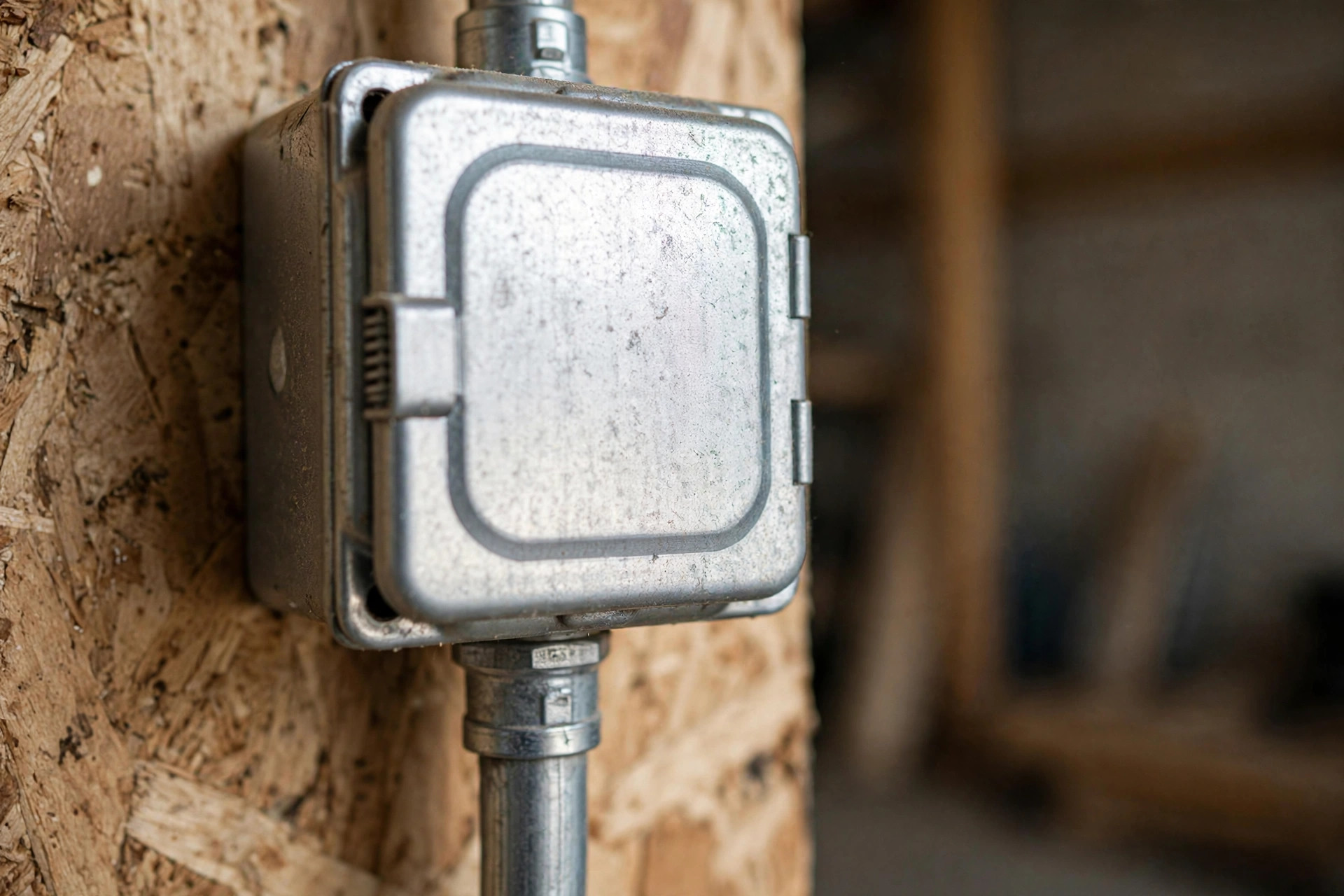
The Plug-In Route: A Charger on a NEMA 14-50 Outlet
With a plug-in setup, the electrician installs a NEMA 14-50 outlet on a dedicated 240-volt, 50-amp circuit, and your charger plugs into it — the same idea as an electric dryer or range outlet, sized for EV duty. Continuous charging runs at up to 40 amps, which comfortably refills a typical day's driving overnight.
The plug-in route's signature advantage is flexibility. Unplug the charger and it goes with you when you move, or swap it for a different unit later without touching the wiring. The outlet itself is also the same type an RV uses, which some households appreciate for visiting family.
One detail matters a great deal on this route: outlet quality. EV charging pulls a heavy load continuously for hours, and inexpensive big-box receptacles are a known weak point — their contacts can loosen and overheat over time. Installers who do EV work specify industrial-grade receptacles built for exactly this duty cycle, and current code calls for GFCI protection on the circuit, provided by a GFCI breaker in the panel.
The Hardwired Route: A Charger Wired Straight In
A hardwired charger — a Tesla Wall Connector is the most common example around Leander — has no plug and no outlet. The unit is mounted on the wall and wired directly into a dedicated circuit by the electrician.
Skipping the outlet raises the ceiling: hardwired stations can run on 60-amp circuits and charge at 48 amps or more, the fastest home charging available. That headroom matters for large-battery trucks and SUVs, long commutes, and homes where two EVs share power through a power-sharing setup. Hardwiring is also the natural choice for many outdoor installations, and it gives the cleanest, most permanent look — nothing to unplug, bump, or wear out.
The trade-off is commitment: moving a hardwired charger later means an electrician visit, not just unplugging it.
The Two Setups, Side by Side
- Connection: Plug-in — charger plugs into a NEMA 14-50 outlet. Hardwired — charger is wired directly into the circuit.
- Fastest charging: Plug-in — up to 40 amps continuous. Hardwired — 48 amps or more on a 60-amp circuit.
- Speed in everyday use: both add roughly 25 to 40 miles of range per hour; the hardwired advantage shows up mainly on the largest batteries and the longest charging sessions.
- Flexibility: Plug-in — take the charger with you, swap units freely, outlet can serve an RV. Hardwired — fixed in place.
- Wear points: Plug-in — the outlet's contacts, which is why industrial-grade hardware matters. Hardwired — none at the connection.
- Best for: Plug-in — flexibility and future moves. Hardwired — maximum speed, outdoor mounting, and permanent installs.
When Plug-In Is the Better Pick
- You may move in the next few years and want to take the charger along.
- Your daily driving fits comfortably within what 40-amp charging returns overnight — our Level 1 vs Level 2 guide walks through that math.
- You like the idea of the outlet serving double duty, for example an RV plug when family visits.
- You want the option to change chargers later without rewiring.
When Hardwired Is the Better Pick
- You want the fastest home charging available — a big battery, a long Leander-to-Austin commute, or both.
- The charger is going outdoors, on a carport or exterior wall.
- Two EVs are in the picture and a power-sharing setup makes sense.
- This is your long-term home and you want a permanent, clean installation with the fewest wear points.
What Both Setups Share
Whichever route you choose, the foundations are identical. Both are Level 2 charging on a new dedicated 240-volt circuit. Both start with a load calculation to confirm your panel can carry the addition — and if it cannot, an electrical panel upgrade may be part of the plan, as our panel upgrade guide explains. And both are permitted work in Leander with a city inspection at the end, handled by the installer — our permit guide covers how that process runs.
In other words, this is not a choice between a "proper" install and a shortcut. It is a choice between two proper installs tuned to different priorities.
The Bottom Line
For most Leander homes, both routes end at the same place: a full battery every morning. Choose plug-in when flexibility matters most, and hardwired when you want the highest charging ceiling in a permanent setup. If you are torn, tell the installer how you drive and where the charger will live — those two answers usually settle it.
When you call Leander EV Charger Pros, we connect you with a local installation professional who installs both types and can recommend the one that fits your panel, your garage, and your car.
Leaning plug-in? It starts with the outlet — see NEMA 14-50 outlet installation in Leander, TX for what a proper installation involves.
Not Sure Which Setup Fits Your Garage?
Call now and we will connect you with a local EV charger installation professional serving Leander who can assess your panel, explain both options, and install the setup that fits how you actually drive.
Call Now to Get Connected