
Do You Need a Permit to Install an EV Charger in Leander, TX?
It is one of the most common questions Leander homeowners ask before installing a home charger — and one of the most important. The short answer: yes, in Leander a new 240-volt charger circuit requires a city electrical permit and an inspection. The good news is that you do not handle any of it yourself. Here is how the process actually works.
Free referral service — we connect you with independent local installation professionals. We do not perform installations ourselves.
Why EV Charger Installation Is Permitted Work
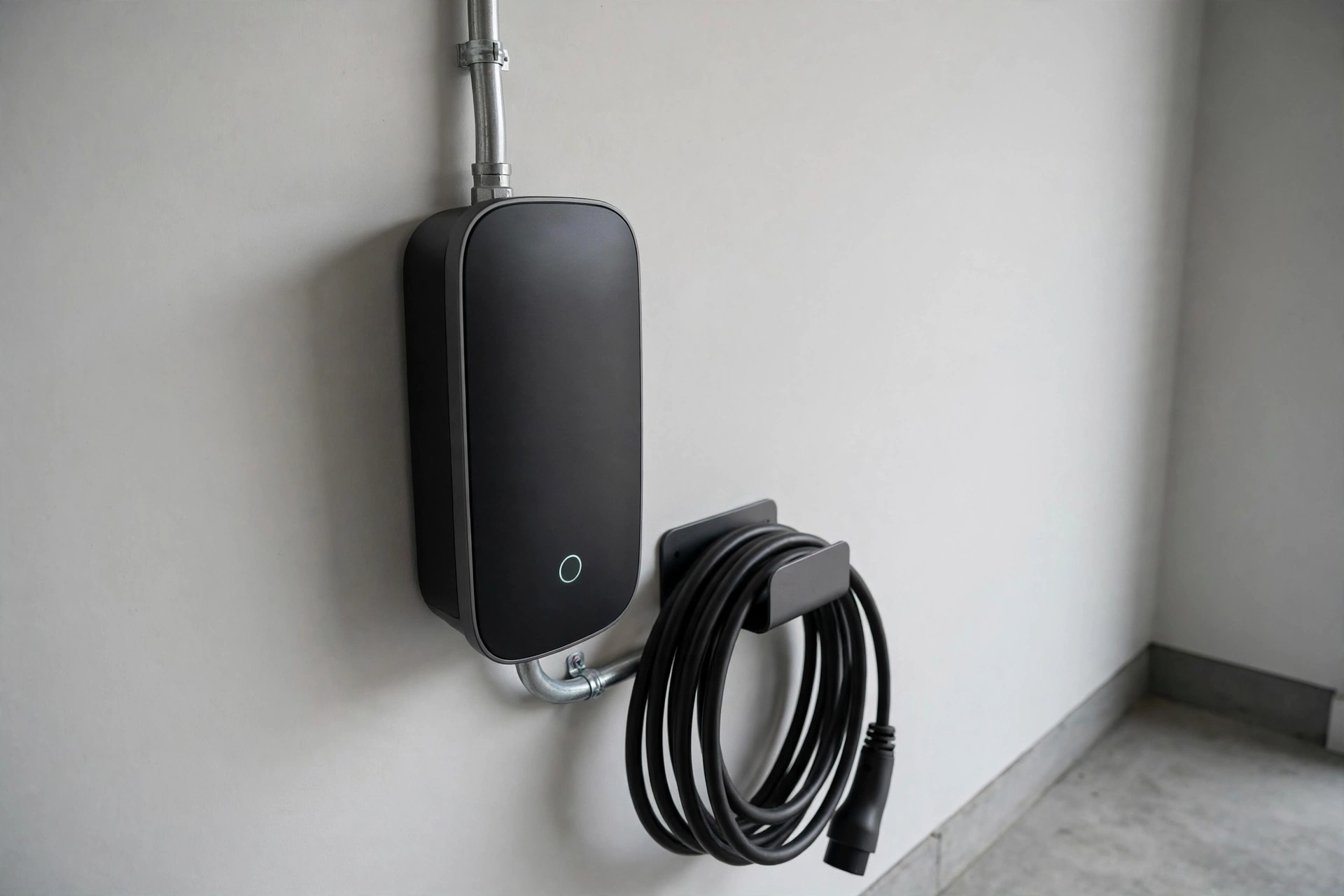
A home EV charger is not like plugging in an appliance. A Level 2 charger or a Tesla Wall Connector adds one of the largest continuous electrical loads in your home — a dedicated 40- to 60-amp circuit that can run at full power for hours at a time. Work like that falls squarely under the National Electrical Code, and the City of Leander requires an electrical permit for it, followed by an inspection to confirm the circuit, breaker, and wiring were done correctly.
The permit is not red tape for its own sake. The inspection verifies the things that keep a high-draw circuit safe for years: correct wire size, the right breaker (including GFCI protection where the code requires it), a load calculation showing your panel can carry the addition, and proper mounting. It also creates a paper record that the work was done to code — something that matters later if you sell the home or ever file an insurance claim involving the electrical system.
What does not need a permit? Plugging a Level 1 charger into an existing household outlet — no new electrical work is involved. The moment a new circuit, a new NEMA 14-50 outlet, or panel work enters the picture, it is permitted work.
How the Permit Process Works, Step by Step
Homeowners are often surprised by how hands-off this is. When a licensed electrician installs your charger, the permit process typically unfolds like this:
- Assessment and load calculation. The installer looks at your panel, confirms it can support the charger circuit, and decides what the job involves. If the panel is short on capacity, an electrical panel upgrade may be part of the plan — our guide on whether you need a panel upgrade for an EV charger explains how that decision is made.
- The installer applies for the permit. The electrician files the electrical permit application with the City of Leander under their license. This is their paperwork, not yours.
- Installation day. The circuit is run, the breaker installed, and the charger or outlet mounted and connected.
- City inspection. A city inspector visits, checks the work against the code and the permit, and approves it. Panel upgrades add one more coordination step, because the power company must disconnect and reconnect the meter around the work.
- Done. You charge at home with inspected, documented work — and keep the permit record with your home files.
Permits in Cedar Park, Georgetown, and the Lake Communities
The Leander process is the template, but the office — and the power company — changes as you move around the area:
- Cedar Park: the city's own permitting office handles electrical permits and inspections, and most homes receive power from Oncor. The sequence is the same: installer applies, installs, city inspects. Cedar Park homeowners can read the full local version in our Cedar Park EV charger permit guide.
- Georgetown: permits run through the city, and electricity comes from Georgetown Utility Systems, the city-owned utility — so panel and service work is coordinated with GUS rather than a regional provider.
- Liberty Hill, Jonestown, and Lago Vista: homes inside city limits permit through the city; properties in the surrounding county areas may permit through Williamson County instead. Power comes from Pedernales Electric Cooperative, which gets involved whenever service or meter work is part of the job. A local installer knows which office applies to your address — one more reason local experience matters out here.
What Can Go Wrong Without a Permit
Every year, homeowners are tempted by a cheaper unpermitted install — often a handyman offer or a DIY video. The risks are concrete:
- Safety: an undersized wire or wrong breaker on a circuit that runs for hours is exactly the failure mode inspections exist to catch.
- Home sales: unpermitted electrical work surfaces in inspections and disclosure, and buyers (and their lenders) can require it to be permitted and inspected retroactively — on your timeline, not theirs.
- Insurance: if an electrical fire is traced to unpermitted work, the claim can get complicated at the worst possible moment.
- Rework: fixing an install that was done wrong usually costs more than permitting it correctly the first time.
None of this is exotic — it is simply why the permit system exists, and why a professional installer's price of admission includes pulling one.
Who Handles the Permit When You Call Us?
The installer does — start to finish. Leander EV Charger Pros is a referral service: when you call, we connect you with an independent local installation professional, and pulling the permit and scheduling the inspection is a standard part of their job. Two questions worth asking whoever you hire: "Will you pull the permit in your name?" and "Will the job be inspected?" A professional answers yes to both without hesitating.
Installing a Tesla charger? The same permit process applies to Tesla Wall Connector installation in Leander, TX.
Ready to Install — Permit Handled?
Call now and we will connect you with a local EV charger installation professional serving Leander — one who handles the permit, the installation, and the inspection as part of the job.
Call Now to Get Connected